Canvas AI
Speculative design to integrate AI into the education system
How might we use a speculative design approach to explore future solutions to these emerging problems by designing experiences that provoke conversation and help craft the future world we want to live in?
Cobi Stancik
Melanie Wells
Min Jung Koo
Kris Brauer
Educational Design
UI/UX
Web Design
Speculative Design
A 7 week project, completed along with 3 peers, (Melanie Wells, Min Jung Koo, Kris Brauer). This project was for "Design Interface" taught by Stephen Bader and Alanna MacGowan.
Group Design Framework: Enhancing AI in Education
How might we design AI that responsibly enhances the learning experience?
By exposing students to new sources and viewpoints, providing context for source material, and offering feedback and collaboration with AI, students can develop a deeper understanding of their area of inquiry and shape their own unique, informed perspectives.
Key Principles:
Transparent: Clearly connects to sources and their context, exposes gaps and frictions, and provides clear explanations.
Personalized & Adaptable: Adjusts based on the learner’s unique needs, adapting to their growth or setbacks.
Collaborative & Process-Driven: Works interactively with students as one tool in a well-rounded, creative process.
Collective Storyboarding
Once we outlined our group’s framework, we brainstormed ways to integrate AI into the education system. We came up with an initial concept: a two-agent system. One AI agent would assist with collaborative research, while the second, a Teaching Assistant (TA), would offer critique and revision suggestions, helping refine the work through a critical lens.
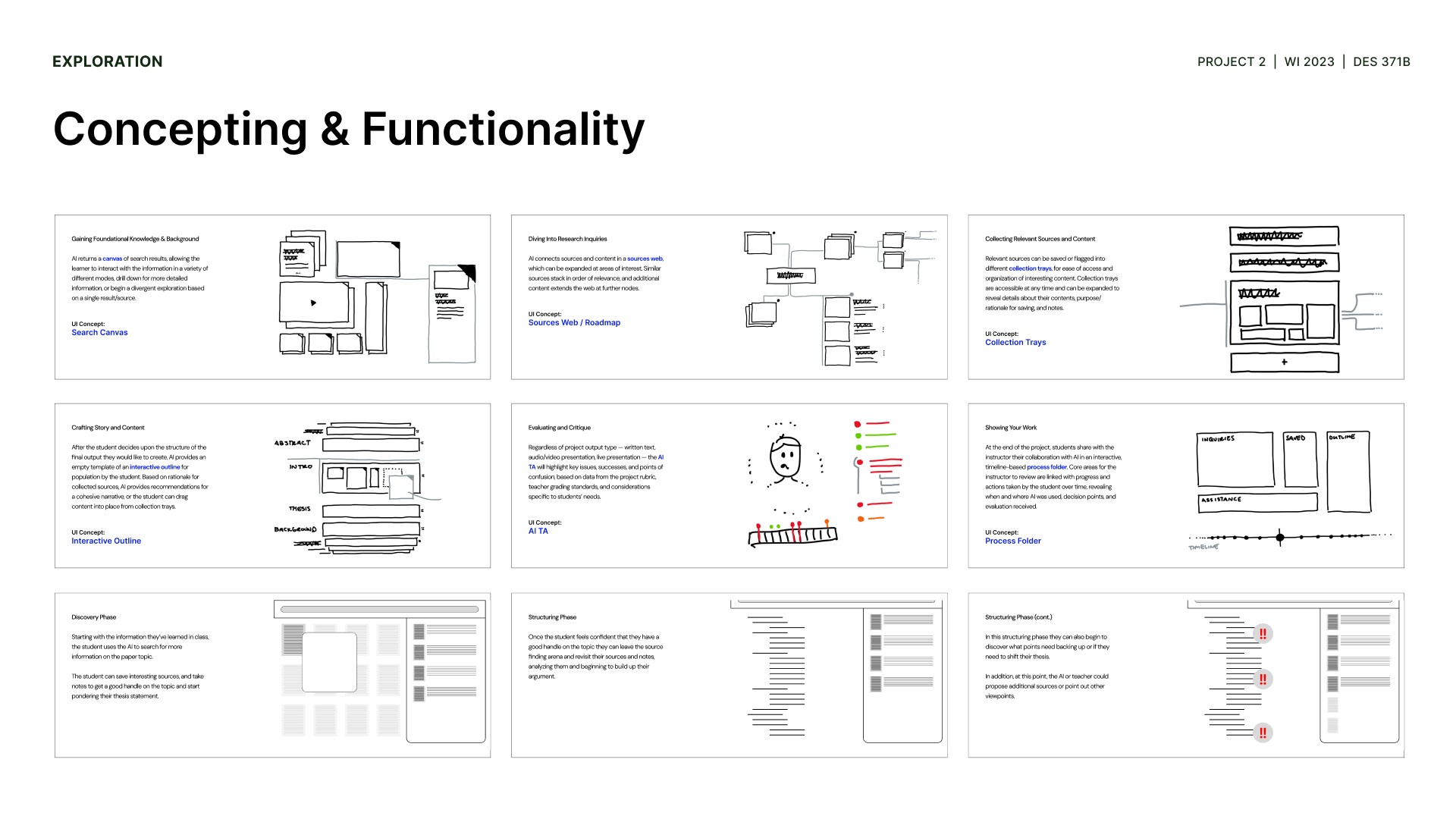
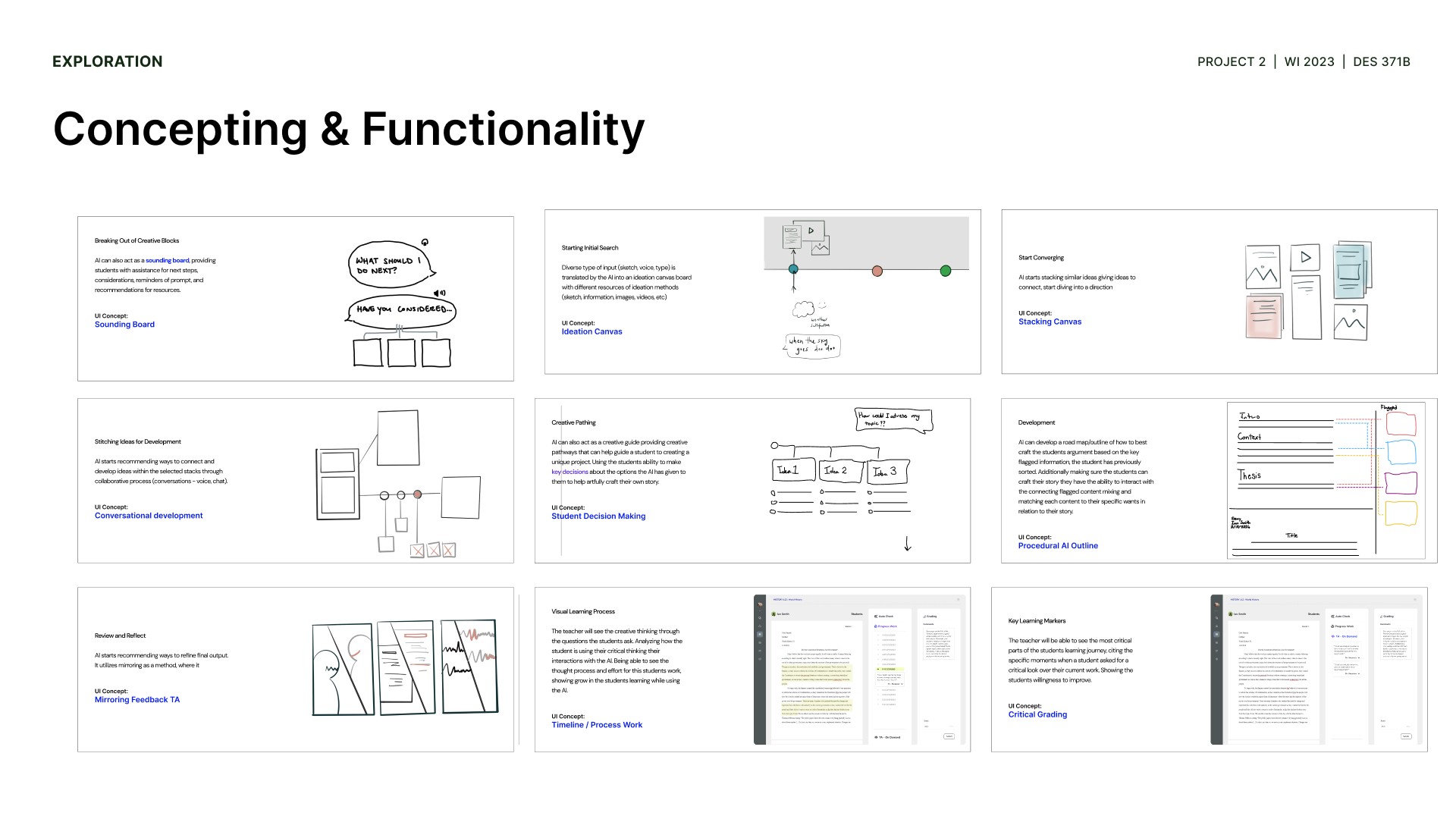
After presenting our ideas to peers and teachers, we felt confident in our design direction. The next step was ideating the functionality of the system and determining how it would interact with the high school environment that would theoretically use it.
Storybeats
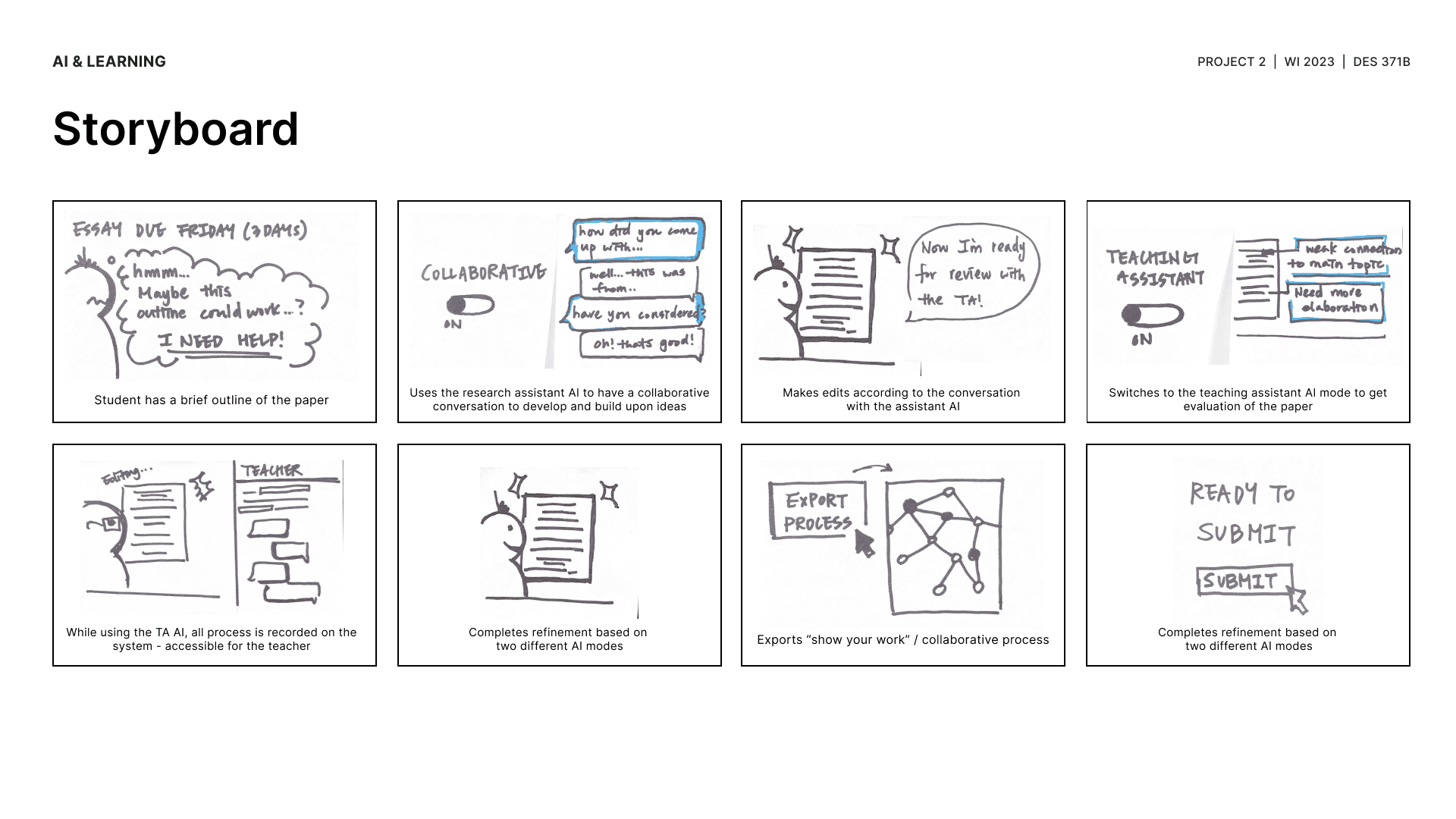
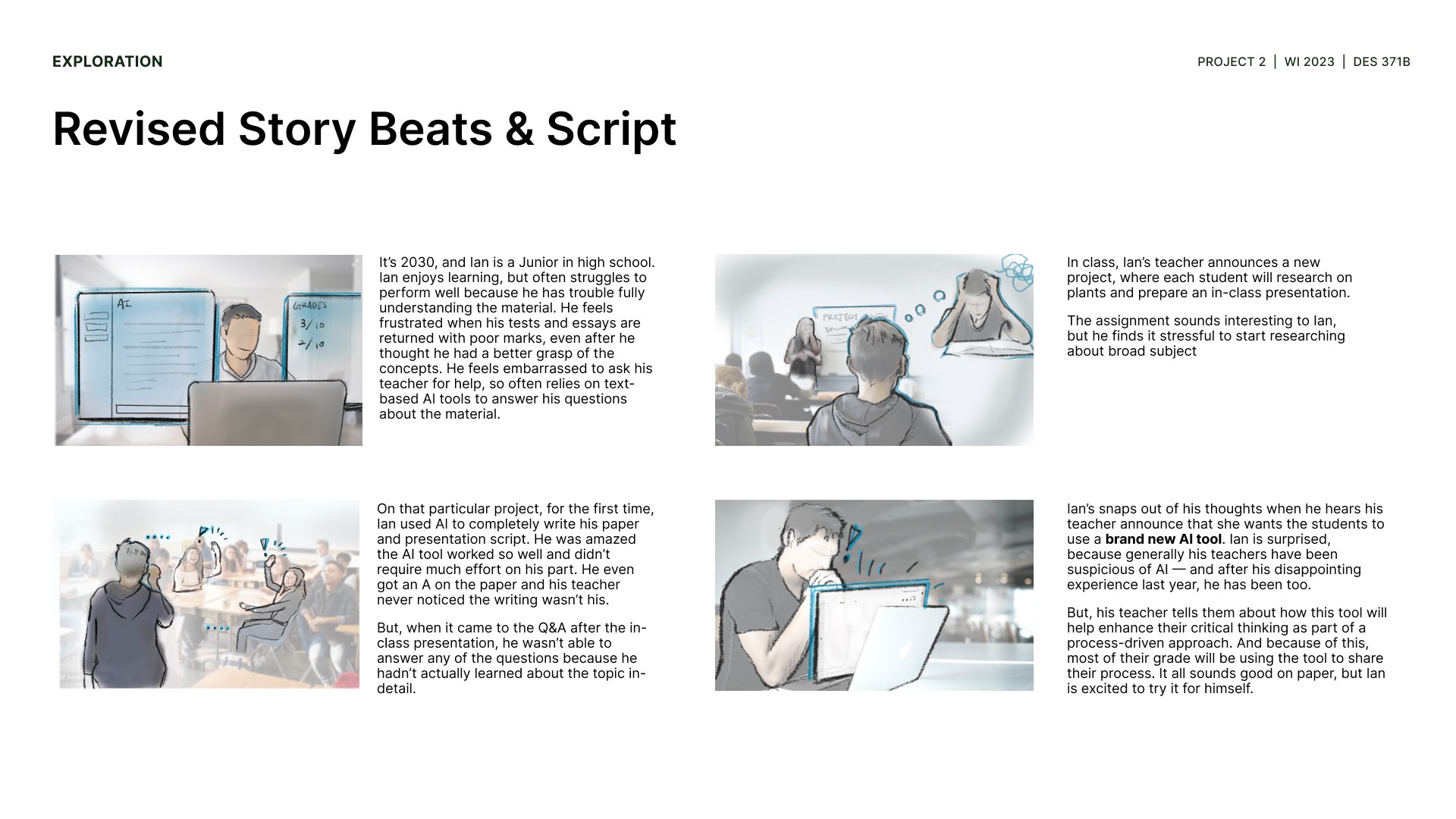
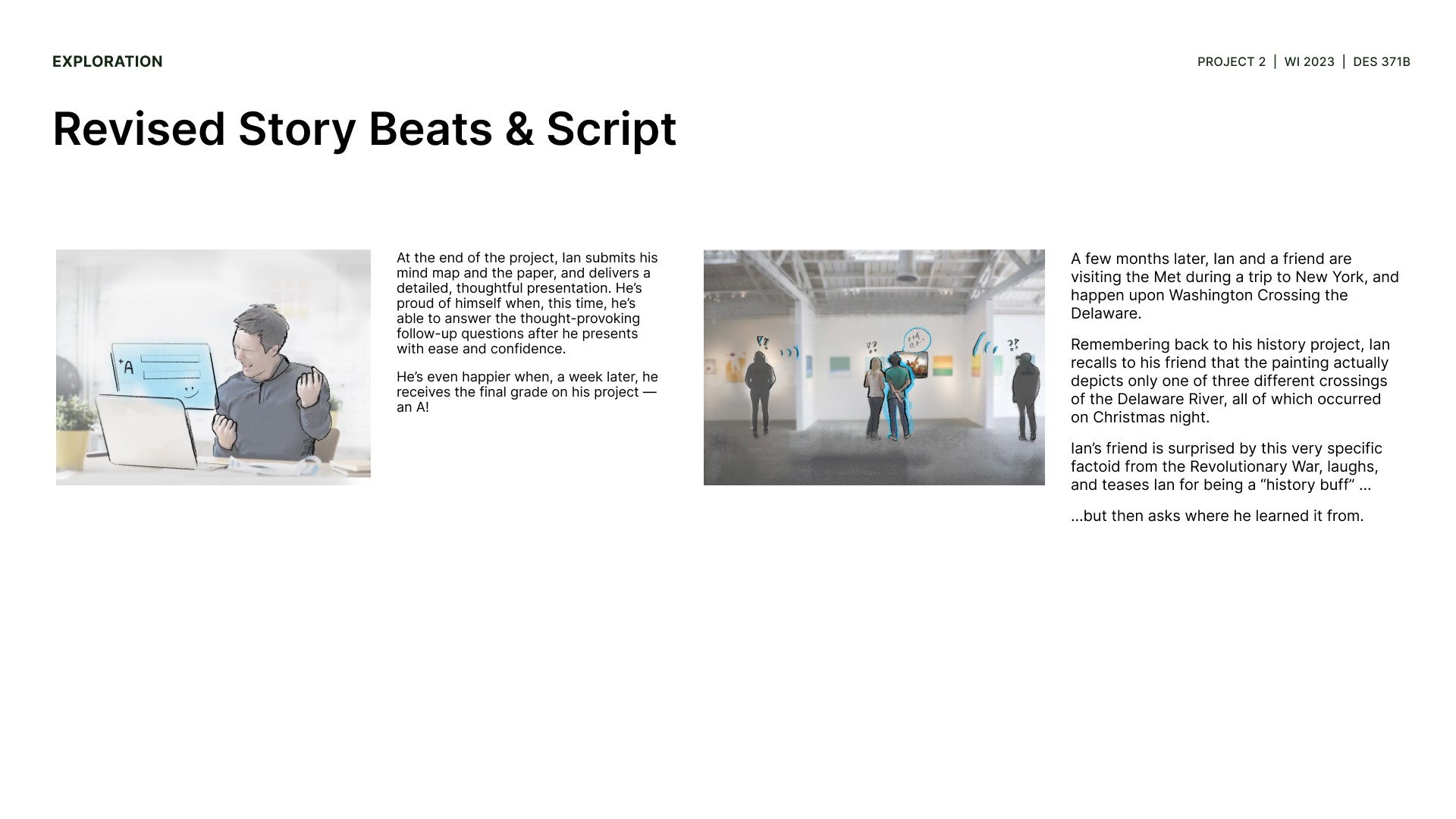
With our product’s functionality outlined, we began brainstorming its user flow. This involved creating a narrative and user scenario to show how the product would be integrated, ensuring that the process we had developed was central to the main user flow.
Polishing Our Viewpoint
We envisioned a future where responsible and helpful AI enriches the learning experience.
In 7-10 years, AI will be more ubiquitous and capable of automating routine tasks. We speculated that students would focus more on developing critical thinking and process-driven approaches to assignments, rather than spending time on producing output.
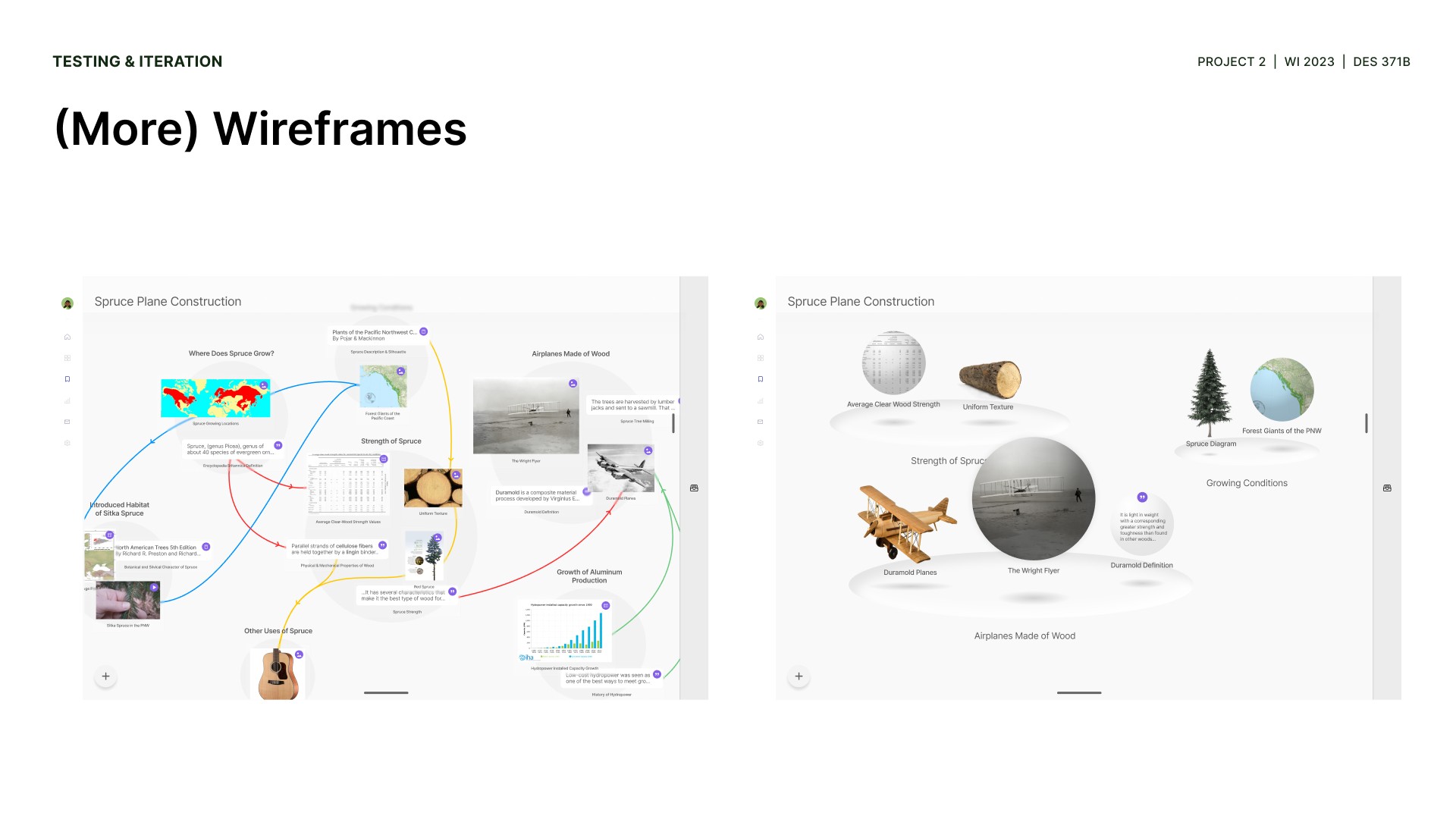
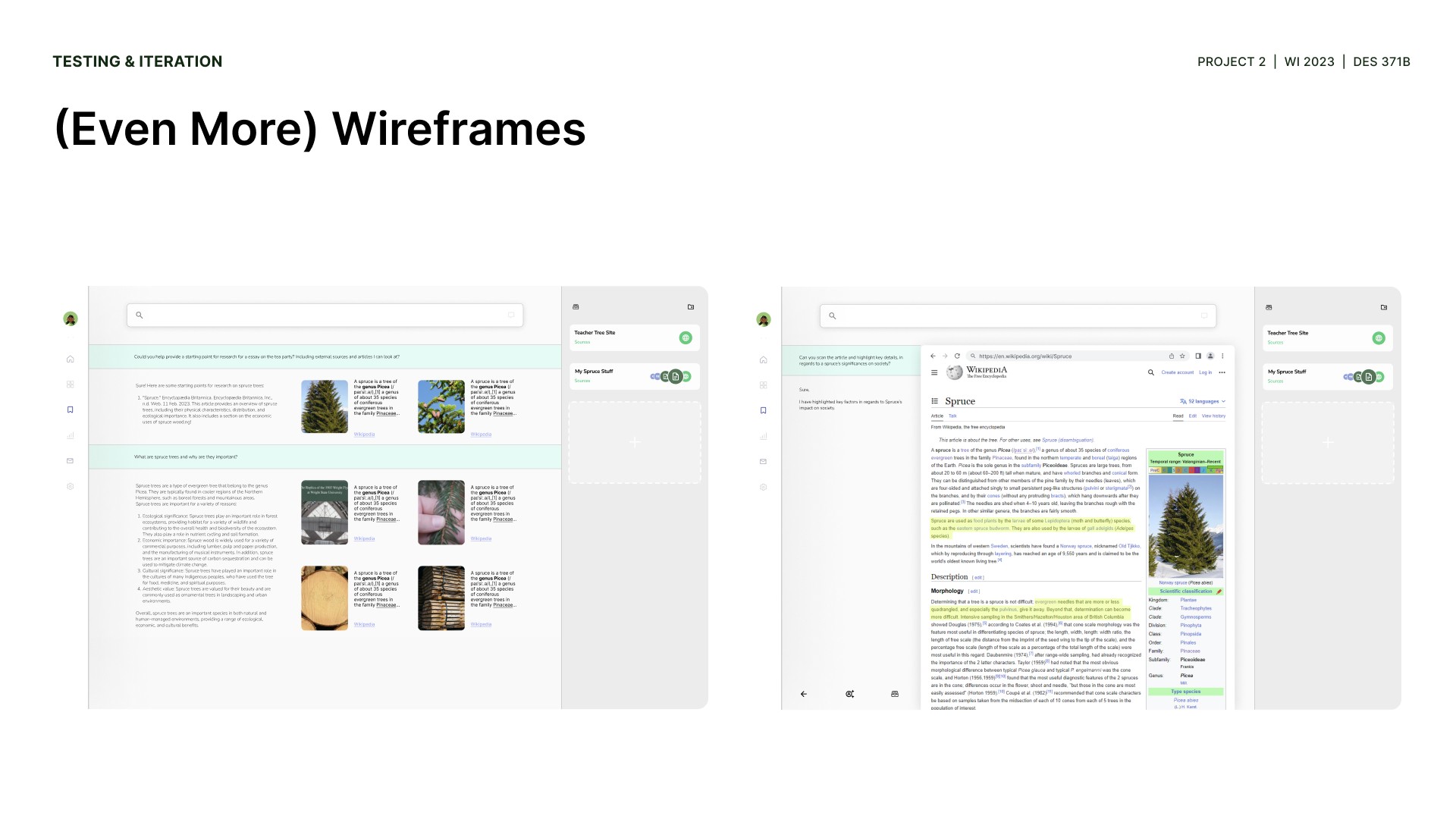
With our refined scope and feedback from peers and teachers, we moved on to creating wireframes for the user flow. Starting with rough wireframes to ensure we were on track, we quickly progressed to higher fidelity versions after a critique.
Final Refinement
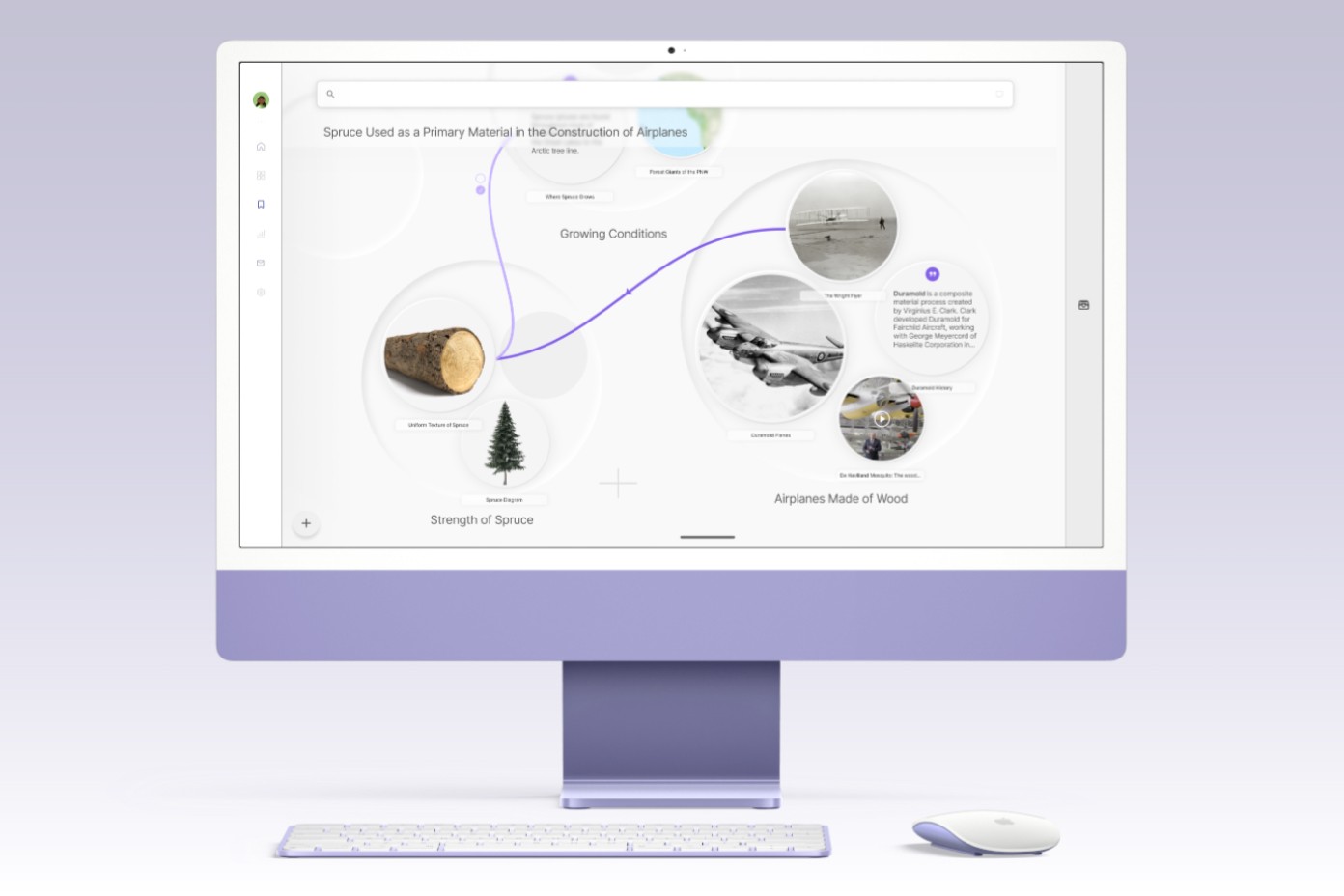
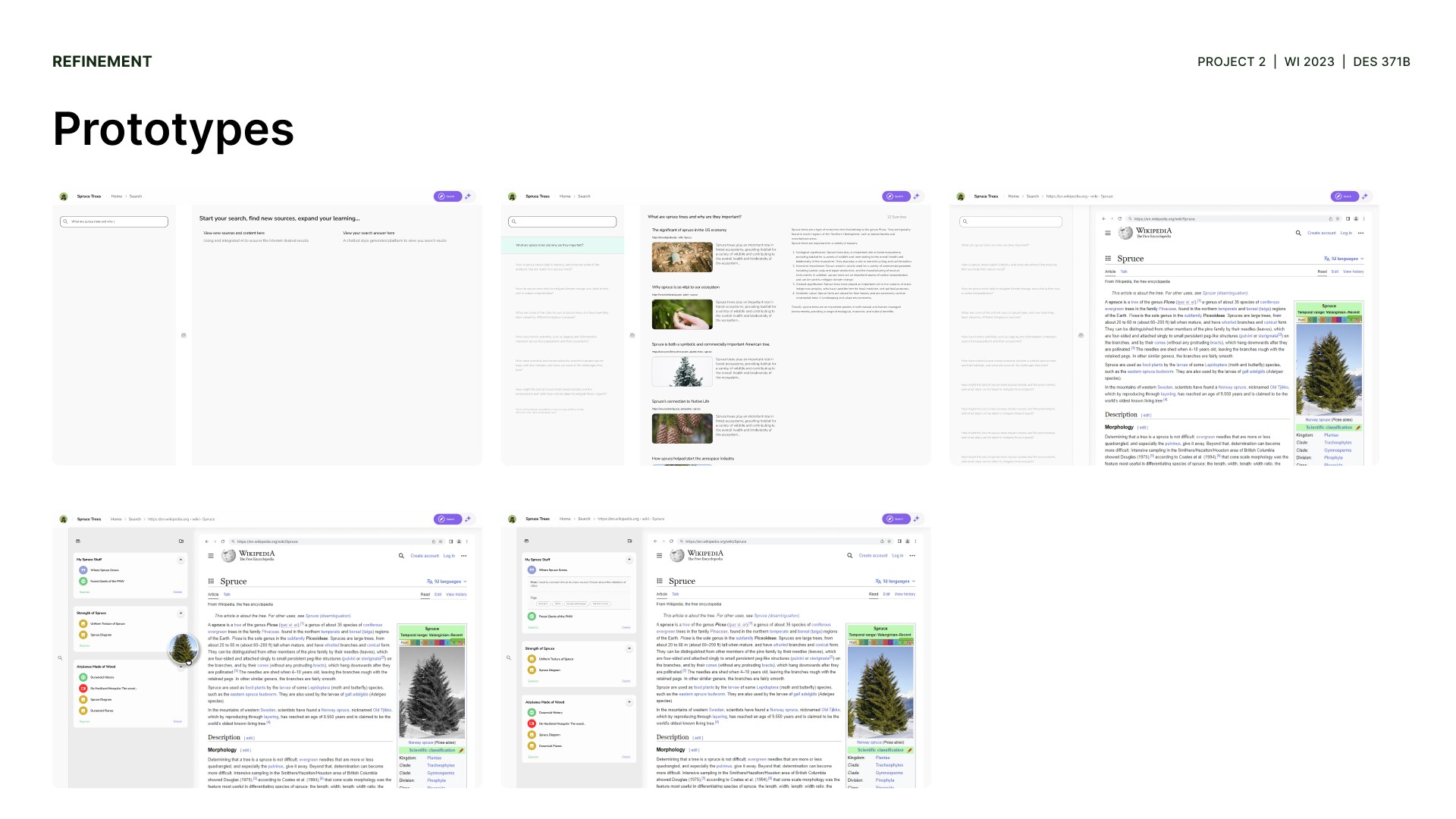
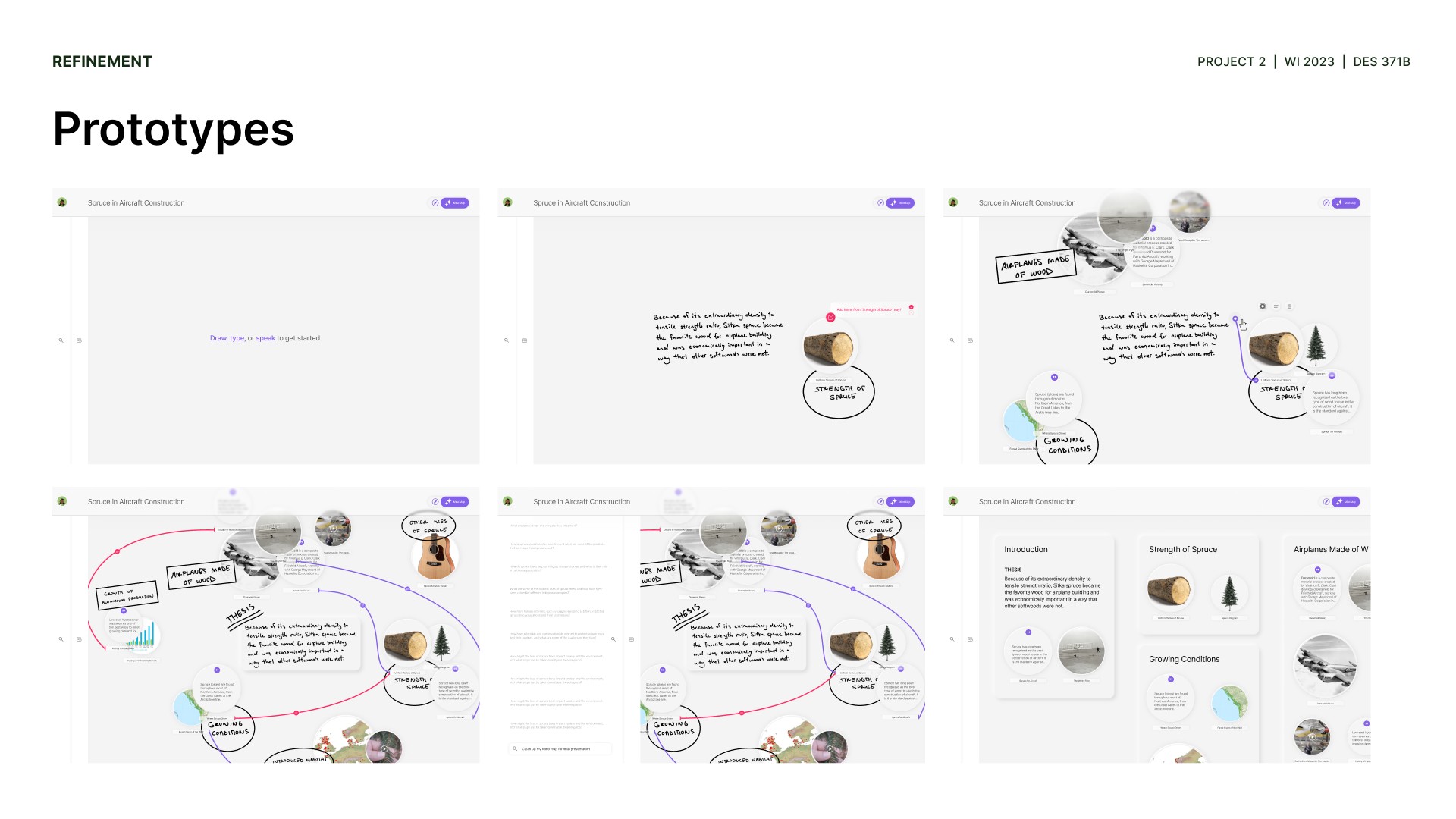
As the project deadline loomed, we received significant critique regarding the UI design—specifically the structure of the Search function and the Mind Map visuals.
As a team, we came together to overhaul the system, ensuring a more cohesive and intuitive flow. With only four days left in the project, we worked tirelessly to refine our system while simultaneously producing the final video for our presentation.